WEF YGL list

This list contains a sorted and vetted compilation of World Economic Forum’s “Global Leaders of Tomorrow” (a one-year program that ran from 1993 to 2003) and “Young Global Leaders” (a five-year program started 2004/2005 and still running). Read more about World Economic Forum and Young Global Leaders in this 2022 article and The Gloal Coup d’Etat.

Access the list

WEF GLT & YGL list 1993–2025 (published online, static, sorted by Year and Family name, last updated 22 February 2026, with som Epstein connections added).

Download for dynamic spreadsheet: 
WEF GLT & YGL 1993–2025.numbers (Mac)
WEF GLT & YGL 1993–2025.ods (Open Office)
WEF GLT & YGL 1993–2025.xlsx (Windows)

Note that formatting discrepancies can occur in the conversion from Google Sheets to other formats.

This list is offered under creative commons license CC BY-NC (Attribution-NonCommercial), which means that you are free to download and use it as reference but not for commercial gain, and the original creators maloneinstitute.org and pharosmedia.se must be attributed when sharing).

Read more on Substack

For statistics and comments after the latest update, see Part 1. For YGL highlights, see subsequent posts in the series (more will follow):

Part 1. WEF Young Global Leaders List Update, 21 Jan 2026
Part 2. WEF Young Global Leaders Highlights: Big Tech, 29 Jan 2026
Part 3. WEF Young Global Leaders Highlights: Climate, 15 Feb 2026
Part 4. WEF Young Global Leaders Highlights: Big Pharma, 22 Feb 2026

Notes

The WEF GLT & YGL 1993–2023 list was originally compiled in February–June 2022 by Inger Nordangard (for Stiftelsen Pharos & Pharos Media Productions) and Anita Hasbury-Snogles (for Dr. Malone’s Malone Institute), with some input from others. It was updated in August 2022 and in September 2023 (mostly by Anita). This latest update (with addition of 2024 and 2025 YGL, corrections of minor errors, removal of duplicates, and more info added) is done by Inger Nordangard, October–December 2025 , published 16 January 2026 (and updated again with smaller corrections and additions).

Disclaimer: Although we have done our best to make it as accurate and up-to-date as possible, the list may still contain minor errors, obsolete info or dead links (some of which may still work if pasted in the Wayback Machine). 

Names: Some spellings have been corrected and last names updated. In much of Asia (and Hungary) it is customary to put the family name first but there are exceptions, especially when working with or in the West. In Myanmar the standard is no family name, only given names. We have tried to identify and put names in the correct column but may not have gotten all of them right.

Positions and Organisations have in as many cases as possible been updated to the most recent we could find. Links to many of the organisations or corporations have also been added, and more detailed sub-categories for increased clarity.

Sector categories chosen by WEF have evolved over the years. Currently they are: Academia/Think-tank; Arts, Culture & Sport (shortened by us to “Culture”); Business; Civil Society; Media; Social Entrepreneurship; and Public Figures (we have use the older “Government” shortened to “Gov.”). Extra subcategories have been added for increased clarity.

Region categories have also changed over the years. Currently they are: Asia, Europe, Latin America, Middle East/North Africa (MENA), North America, Sub-saharan Africa. We have used: Africa, Asia, Eurasia, Latin America, MENA, North America, and Oceania.

Extra info: We have added additional columns such as and WEF Profile link or or Wikipedia (if available, or else LinkedIn, company pages, or news articles), Sex, Past positions, Education, and Notes. As of 2026, also Birth year, and som extra columns to highlight people or organisations of special interest for the global agenda. These are Agenda driving (organisations), Sustainability (climate, DEI, ESG, SDGs, MDGs), Big Tech (significant tech software, AI, surveillance etc.), Health (COVID-19, vaccines), Notable (persons of potential interest, including some Nobel laureates, celebrities, billionaires, royalty, or critics), and Bad apples (YGLs convicted of felony, suspected of corruption, financial irregularities etc).

Sources

We have done much manual research in order to verify each GLT and YGL and to identify those with minimal info given in WEF’s lists. Some prominent world leaders appear to have been removed from the WEF website, or were never officially listed, but have been named by Klaus Schwab himself. The list is primarily based on World Economic Forum’s own published lists, press releases, and  search engines. As of 2024, the WEF YGL search engine is no longer public and many older profiles have been removed. Some can still be found via Internet Archives (the Wayback Machine).

Note that pdf files may download automatically when clicked.

Global Leaders of Tomorrow (1993–2003)

Young Global Leaders (2005–)
YGL Honourees 2005 (YGL old search engine)
YGL Honourees 2007 (YGL old search engine)
YGL Honourees 2016 (WEF press release)
YGL Honourees 2017 (WEF press release)
YGL Honourees 2018 (WEF press release)
YGL Honourees 2019 (WEF press release)
YGL Honourees 2020 (WEF press release)
YGL Honourees 2021 (WEF press release)
YGL Honourees 2022 (WEF press release)
YGL Honourees 2023 (WEF press release)
YGL Honourees 2024 (WEF press release)
YGL Honourees 2025 (WEF press release) + YGL Honourees 2025 (YGL website list)
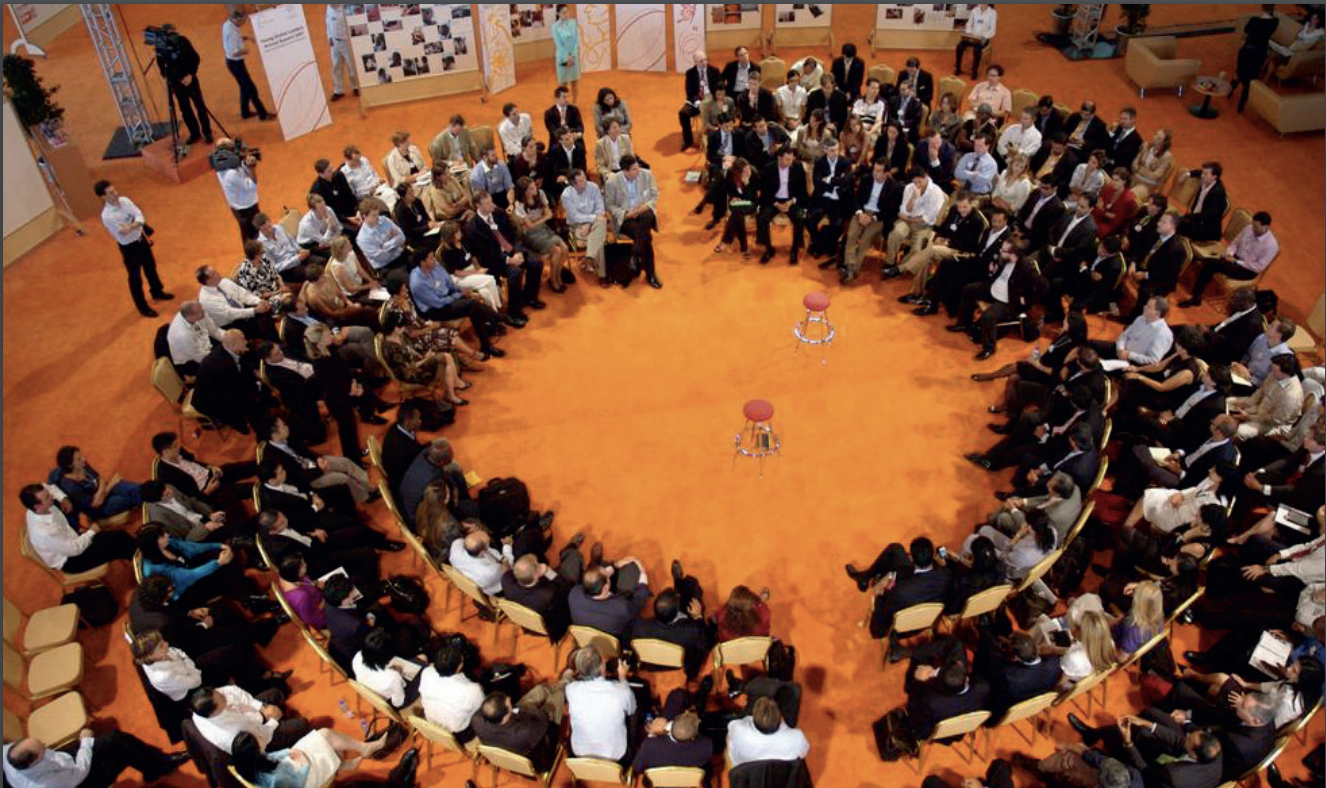
At the Forum for Young Global Leaders (source: WEF YGL brochure 2011)


The list is open to corrections and additions. If you spot an error, a duplicate, or have questions or more information, please contact us. Or if you want to help keeping it updated. 

If you find this list helpful, please consider making a donation to our foundation as an appreciation of all the time and effort that has put into compiling it.

Jacob Nordangard Substack

Jacob Nordangard books